
Horse Rugging Guide: What kind of horse blanket does your horse need in winter?
Blanket guide for horses
Which horse blanket does your horse need in winter?
Blanketing is not a trend topic, but a question of health, housing, weather and horse type. Here you will learn when a rain sheet, winter blanket or blanket layering system makes sense and how to find the right fill weight.
Quick overview
Not every horse automatically needs a blanket. But every horse needs a decision that fits coat, clipping, age, health, housing, weather and movement.
Important
Cold alone is rarely the biggest problem. Wet weather, wind and limited thermoregulation often put much more strain on many horses.
Remember
The right blanket protects without overheating. That is exactly where the art of blanketing lies.
Why blanketing is a topic you should not ignore
Horses have an impressive ability to regulate their own body temperature. A healthy, unclipped horse with a good winter coat, enough roughage and suitable housing often copes surprisingly well with cold weather. Still, that does not mean blankets are generally unnecessary.
As soon as a horse is clipped, develops little winter coat, gets older, is health-compromised, loses weight quickly or is in regular training, the situation changes. The body then has to use significantly more energy to stay warm. This is exactly where a horse blanket can provide useful support.
A good blanket does not only help against cold. It protects against chilling, wetness, wind, muscle tension, unnecessary energy loss and long drying times after rain or snow. Especially for sensitive horses, this can make the difference between a relaxed winter and constant strain.
The most important factors when blanketing
A horse blanket should never be chosen based on temperature alone. The overall picture is always what matters. A clipped sport horse in a windy open stable needs different support than an unclipped, robust horse with a dense winter coat. Age, body condition and training intensity also play a major role.
Clipping
Clipped horses lose natural protection and often need support earlier.
Wet weather
Continuous rain can soak the coat and make heat regulation more difficult.
Wind
Wind draws warmth away from the body and significantly increases the feeling of cold.
Age & health
Older, sick or thin horses often need protection earlier.
Why blanketing can be important
Many critics say horses are naturally made for winter. In principle, that is true, but only under suitable conditions. A horse with a natural winter coat, freedom to move, dry resting areas and enough feed can often compensate for cold very well. However, a clipped, older, sick or sensitive horse cannot always do that.
Modern horse keeping is not always comparable to natural wild horse conditions. Many horses are trained, clipped, kept in stables, sometimes stand wet, face changing workloads or need to remain capable despite bad weather. That is exactly why blanketing is not a contradiction to horse health, but can be conscious management.
The important thing is not to blanket out of habit. The blanket should always suit the horse and the weather. Too thin offers little protection, too thick can cause overheating. The best blanket guide is therefore always the combination of knowledge, observation and regular checks under the blanket.
Which fill weight makes sense?
As a rough guide: unclipped horses often need significantly less filling than clipped horses. In mild, dry weather, many unclipped horses do not need a blanket at all or only an unfilled rain sheet. Clipped horses, on the other hand, often need a light blanket even in cooler temperatures.
The following ranges are only guidelines. Wind, rain, housing, movement, body condition and individual sensitivity to cold can always change the decision.
10 to 15 °C
Unclipped usually without blanket. Clipped often 0 g to 50 g.
5 to 10 °C
Unclipped 0 g to 50 g if needed. Clipped often 100 g.
0 to 5 °C
Unclipped 50 g to 100 g. Clipped often 150 g to 200 g.
below 0 °C
Depending on the horse, 150 g to 300 g or a layering system with an under blanket.
Why our blanket layering system is often more useful than a single blanket
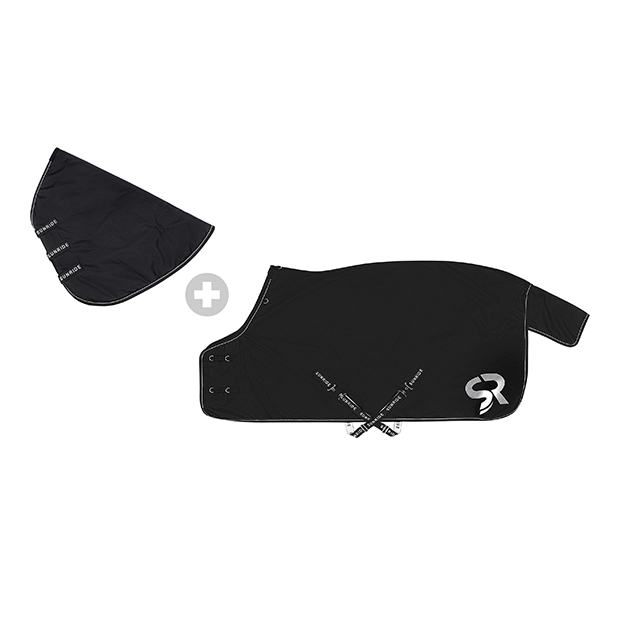
Winter is not consistent. Frost in the morning, sun at midday, rain in the evening, wind at night. That is exactly why a single thick winter blanket is often less flexible than a well-designed blanket layering system. With a suitable outer blanket and different under blankets, you can respond much more precisely.
Outer blanket
Protects against rain, wind and dirt. It forms the robust outer protective layer.
Under blanket
Increases warmth depending on the weather. This lets you work flexibly with 50 g, 100 g or more.
More control
You do not need a completely new blanket for every weather situation, but can combine layers as needed.
This is especially practical for horses whose needs change during winter. For example due to clipping, coat change, muscle development, illness, age or changing temperatures.
Why our horse blankets are a good choice
A good horse blanket must do more than keep warm. It should sit reliably, allow enough freedom of movement, be weatherproof, not rub and simply work in everyday use. That is exactly what matters with SUNRIDE blankets.
The combination of fit, material, waterproofness, breathability and sensible fill weight is especially important. A blanket should protect your horse without overheating it. It should sit securely without blocking the shoulder. And it should be designed so that you can use it easily in everyday life.
The blanket layering system makes the choice even more flexible, because you do not just have one fixed solution, but can adjust the warmth depending on the weather and the horse.
Blanket guide
Which blanket currently suits your horse?
The following information is intended as a general guideline. Whether your horse needs a blanket and which fill is suitable also depends on coat, age, health, housing, wind, rain and activity level.
Unclipped
| Temperature | Recommendation | Fill Weight |
|---|---|---|
| from approx. 10°C | usually no filling needed | 0g or unfilled rain sheet in wet weather |
| approx. 5 to 10°C | light weather protection | 50g |
| approx. 0 to 5°C | light to medium warmth | 100g to 150g |
| approx. -5 to 0°C | significantly more insulation | 150g to 300g |
| below -5°C | consider significantly warmer blanketing if needed | 300g or combined with an under blanket |
Clipped
| Temperature | Recommendation | Fill Weight |
|---|---|---|
| from approx. 12°C | light protection depending on weather | 0g or 50g |
| approx. 8 to 12°C | light warmth | 50g to 100g |
| approx. 3 to 8°C | noticeable warmth protection | 100g to 150g |
| approx. -2 to 3°C | warm winter blanket | 150g to 300g |
| approx. -8 to -2°C | significantly warmer blanketing | 450g or 250g + 150g underrug |
| below -8°C | strong insulation required depending on the horse | 450g + 150g under blanket or layering system |
Tip: In windy or rainy conditions, choosing a slightly warmer blanket can be helpful. On sunny and dry days, a lighter option is often sufficient.
Conclusion
Correct blanketing does not mean wrapping a horse as warmly as possible. It means recognizing the actual need. An unclipped, healthy horse often needs less protection than expected. A clipped, older, sick or sensitive horse, on the other hand, may need support much earlier. With a suitable rain sheet, winter blanket or a flexible blanket layering system, you can support your horse through winter without overblanketing and without letting it get unnecessarily cold.



Was this post helpful?
Thank you for your feedback!